
Introduction
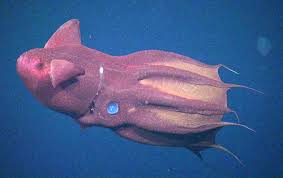
Hidden deep beneath the ocean’s surface lives one of the most unusual and misunderstood creatures on Earth—the vampire squid. Despite its scary name, this mysterious animal is not a true squid, nor is it a blood-sucking predator. Instead, it is a gentle drifter of the deep sea, perfectly adapted to survive in one of the harshest environments on the planet.
The vampire squid has fascinated scientists and ocean lovers for decades. With its glowing body, webbed arms, and ability to live where most animals cannot, it stands as a powerful example of how life can adapt in extreme conditions. In this article, we’ll explore everything you need to know about the vampire squid—its habitat, behavior, unique features, and why it plays an important role in the ocean ecosystem.
What Is a Vampire Squid?
The vampire squid, scientifically known as Vampyroteuthis infernalis, means “vampire squid from hell.” While the name sounds dramatic, it mostly refers to its dark color and cloak-like webbing rather than its behavior.
Key Characteristics
- Belongs to its own unique group, separate from squids and octopuses
- Grows up to about 30 cm (1 foot) long
- Has eight arms connected by a web-like membrane
- Displays deep red or black coloration
- Can produce light (bioluminescence)
Unlike typical squids, the vampire squid does not hunt large prey. Instead, it feeds on tiny particles floating in the water.
Habitat: Life in the Ocean’s Dark Zone
The vampire squid lives in the deep ocean, usually between 600 to 900 meters (2,000 to 3,000 feet) below the surface. This region is known as the oxygen minimum zone, where oxygen levels are extremely low.
Why This Habitat Is Unique
Most animals cannot survive in such low oxygen conditions, but the vampire squid thrives here. This gives it a major advantage—it faces very few predators and little competition for food.
Adaptations for Survival
- Low metabolic rate to conserve energy
- Special blood pigments that efficiently carry oxygen
- Large gills for better oxygen absorption
These features allow the vampire squid to live where others cannot.
Physical Features: Built for the Deep Sea
The vampire squid has a strange yet fascinating appearance that helps it survive in complete darkness.
1. Webbed Arms (The “Cape”)
Its eight arms are connected by a web, giving it a cloak-like look. When threatened, it can wrap this web around itself, creating a defensive “ball.”
2. Bioluminescent Organs
The vampire squid can produce light using special cells called photophores.
Uses of Bioluminescence:
- Confuse predators
- Communicate with others
- Attract small food particles
3. Large Eyes
Its eyes are among the largest (relative to body size) in the animal kingdom. This helps it detect even the smallest amount of light in the dark ocean.
4. Velvety Skin
Its soft, jelly-like body reduces energy use and allows it to float easily without much effort.
Diet: What Does a Vampire Squid Eat?
Unlike many deep-sea creatures, the vampire squid is not an active hunter. Instead, it feeds on marine snow—a mixture of:
- Dead plankton
- Tiny organisms
- Organic debris
Feeding Method
The vampire squid uses two long filaments to collect food particles from the water. It then rolls these particles into small balls and eats them.
This method requires very little energy, making it perfect for survival in a low-food environment.
Behavior: Calm and Energy Efficient
The vampire squid is known for its calm and slow lifestyle. It avoids unnecessary movement to conserve energy.
Defensive Behavior
When threatened, it does not attack. Instead, it uses unique defense strategies:
- Inking with light: Instead of dark ink like squids, it releases glowing mucus
- Turning inside out: It flips its body to hide sensitive parts
- Floating still: Sometimes it remains motionless to avoid detection
These behaviors help it survive without wasting energy.
Reproduction and Life Cycle
The reproduction of the vampire squid is still not fully understood due to the difficulty of studying deep-sea creatures. However, scientists have discovered some interesting facts.
Key Points
- Females can store sperm for long periods
- They reproduce multiple times over their lifetime
- Eggs are released in small batches
This slow and steady reproduction strategy matches their low-energy lifestyle.
Evolution: A Living Fossil
The vampire squid is often called a living fossil because it has changed very little over millions of years.
Why Is It Unique?
- Shares traits with both squids and octopuses
- Represents an ancient evolutionary line
- Survived major extinction events
This makes it extremely valuable for scientists studying the history of marine life.
Importance in the Ecosystem
Even though it lives deep in the ocean, the vampire squid plays an important role in maintaining balance.
Its Role Includes:
- Recycling organic material (marine snow)
- Supporting deep-sea food chains
- Helping maintain ocean health
Without creatures like the vampire squid, waste materials would build up in the ocean.
Myths vs Facts
Myth 1: It drinks blood
Fact: It does not drink blood at all.
Myth 2: It is dangerous to humans
Fact: It is harmless and avoids interaction.
Myth 3: It is a true squid
Fact: It belongs to its own separate group.
Real-World Example: Deep-Sea Exploration
The vampire squid has been studied using deep-sea robots and submersibles. These tools allow scientists to observe it in its natural habitat without disturbing it.
For example, remotely operated vehicles (ROVs) have captured rare footage showing how it floats gracefully and uses its glowing defense.
This research helps us understand how life can survive in extreme environments—and may even inspire future technologies.
Challenges and Threats
Even though it lives far from humans, the vampire squid is not completely safe.
Potential Threats
- Deep-sea mining
- Climate change affecting oxygen levels
- Ocean pollution
Changes in ocean conditions could impact its fragile habitat.
Conclusion
The vampire squid is one of the most fascinating creatures in the ocean. Despite its scary name, it is a peaceful and highly adapted animal that survives in extreme conditions where most life cannot exist.
From its glowing body to its slow, energy-saving lifestyle, every part of the vampire squid is designed for survival in the deep sea. It reminds us that even in the darkest parts of our planet, life can thrive in incredible ways.
As scientists continue to explore the ocean, the vampire squid will remain a symbol of mystery, resilience, and the wonders of deep-sea life.
FAQ Section
1. Is the vampire squid really a squid?
No, it is not a true squid. It belongs to its own unique group of marine animals.
2. Does the vampire squid drink blood?
No, despite its name, it feeds on organic particles, not blood.
3. Where does the vampire squid live?
It lives deep in the ocean, usually between 600–900 meters below the surface.
4. How does it defend itself?
It uses bioluminescent mucus, body flipping, and camouflage to avoid predators.
5. Why is it called a “living fossil”?
Because it has remained mostly unchanged for millions of years.