
Introduction
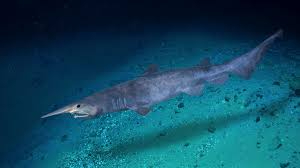
Deep beneath the ocean’s surface, where sunlight fades and pressure rises, lives one of the strangest creatures ever discovered—the goblin shark. With its long, flattened snout, ghostly pink skin, and terrifying extendable jaws, this rare species looks like something out of a science fiction movie. Yet, it is very real—and even more fascinating than it appears.
Often called a “living fossil,” the goblin shark has existed for millions of years with little change in its design. This makes it a valuable window into the past, helping scientists understand how ancient sharks once lived and hunted. Despite its unusual appearance, the goblin shark is not dangerous to humans. In fact, it remains one of the least understood creatures in the ocean.
In this article, we will explore everything you need to know about the goblin shark—from its unique features and habitat to its behavior and importance in marine ecosystems.
What Is a Goblin Shark?
The goblin shark (scientific name: Mitsukurina owstoni) is a deep-sea shark species known for its bizarre appearance and rare sightings. It belongs to a family of sharks that dates back over 100 million years.
Key Characteristics
- Long, blade-like snout (called a rostrum)
- Pale pink or grayish skin due to visible blood vessels
- Extendable jaws that shoot forward to catch prey
- Slender body with soft muscles
- Small eyes adapted for low-light environments
Unlike fast-swimming sharks such as great whites, the goblin shark moves slowly through the deep ocean, relying on stealth rather than speed.
Habitat and Distribution
Where Do Goblin Sharks Live?
Goblin sharks are found in deep ocean waters around the world. They prefer depths of:
- 300 to 1,200 meters (984 to 3,937 feet)
- Continental slopes and submarine canyons
Common Regions
Although rare, goblin sharks have been recorded in:
- The Pacific Ocean (especially near Japan)
- The Atlantic Ocean
- The Indian Ocean
Most sightings come from waters near Japan, which is why the species was first identified there.
Why Are They So Rare?
Goblin sharks live in areas that are extremely difficult for humans to explore. Their deep-sea habitat, combined with their slow movement, makes encounters very uncommon.
Unique Physical Features
The goblin shark’s appearance is unlike any other shark species.
The Long Snout
Its most recognizable feature is its elongated snout. This structure is packed with sensory organs that detect electrical signals from prey.
Extendable Jaws
One of the most fascinating traits is its jaw mechanism. The goblin shark can:
- Shoot its jaws forward rapidly
- Grab prey in a fraction of a second
- Pull its jaws back into place after feeding
This feeding style is called “slingshot feeding.”
Pink Skin
Unlike most sharks, goblin sharks appear pink because their skin is semi-transparent. Blood vessels underneath give them this unusual color.
Diet and Hunting Behavior
What Do Goblin Sharks Eat?
Goblin sharks are carnivorous and feed on a variety of deep-sea creatures, including:
- Small fish
- Squid
- Crustaceans
How Do They Hunt?
Due to low light conditions in the deep sea, goblin sharks rely on their senses rather than sight.
Hunting Strategy:
- Detect prey using electroreceptors in the snout
- Move slowly toward the target
- Launch jaws forward to capture prey instantly
This method allows them to conserve energy while still being effective predators.
Behavior and Lifestyle
Slow and Energy-Efficient
Goblin sharks are not aggressive hunters. Instead, they:
- Move slowly to conserve energy
- Rely on ambush tactics
- Spend most of their time alone
Rarely Seen by Humans
Because they live in deep waters, goblin sharks are rarely encountered. Most sightings occur when:
- They are accidentally caught in fishing nets
- Deep-sea exploration equipment records them
Reproduction and Life Cycle
Very little is known about goblin shark reproduction, which adds to their mystery.
What Scientists Believe
- They are likely ovoviviparous (eggs hatch inside the mother’s body)
- Females give birth to live young
- Litter size is unknown
Due to the difficulty of studying them in their natural habitat, many aspects of their life cycle remain a mystery.
Why Is the Goblin Shark Called a “Living Fossil”?
The term “living fossil” is used for species that have remained largely unchanged for millions of years.
Ancient Lineage
Goblin sharks are part of a lineage that dates back to the early Cretaceous period. Fossils of similar sharks show:
- Nearly identical body structures
- Similar feeding mechanisms
This means the goblin shark has survived multiple mass extinctions with minimal changes.
Are Goblin Sharks Dangerous to Humans?
Despite their frightening appearance, goblin sharks pose no real threat to humans.
Reasons They Are Not Dangerous
- They live far below typical human diving depths
- They are slow-moving and not aggressive
- Human encounters are extremely rare
There have been no confirmed attacks on humans by goblin sharks.
Importance in Marine Ecosystems
Even though they are rarely seen, goblin sharks play an important role in maintaining ocean balance.
Their Role
- Control populations of deep-sea prey species
- Serve as indicators of deep-sea ecosystem health
- Help scientists understand ancient marine life
Studying goblin sharks can also provide insights into how species adapt to extreme environments.
Threats and Conservation
Are Goblin Sharks Endangered?
Goblin sharks are currently not considered endangered, but they are still vulnerable.
Main Threats
- Deep-sea fishing (bycatch)
- Habitat disturbance
- Lack of research and monitoring
Conservation Efforts
Because they are rarely encountered, there are limited targeted conservation programs. However:
- Marine protection policies indirectly help them
- Deep-sea research is improving awareness
Fascinating Facts About Goblin Sharks
- They can extend their jaws up to 10% of their body length
- Their snout can detect electric fields from prey
- They are sometimes called “elfin sharks” due to their strange appearance
- Their teeth are long and thin, perfect for gripping slippery prey
- They have been found at depths over 1,300 meters
Conclusion
The goblin shark is one of the ocean’s most mysterious and fascinating creatures. Its unusual appearance, ancient lineage, and unique hunting style make it truly one of a kind. While it may look frightening, it plays a vital role in deep-sea ecosystems and poses no danger to humans.
As technology improves and deep-sea exploration continues, we may uncover more secrets about this elusive species. Until then, the goblin shark remains a symbol of how much we still have to learn about the hidden depths of our oceans.
FAQ Section
1. Why is the goblin shark so rare?
Goblin sharks live in deep ocean environments that are difficult for humans to explore, making sightings very uncommon.
2. Can a goblin shark attack humans?
No, goblin sharks are not dangerous to humans and have never been known to attack people.
3. How big can a goblin shark grow?
They can grow up to 3–4 meters (10–13 feet) in length, although most are smaller.
4. What makes the goblin shark unique?
Its extendable jaws, long snout, and pink skin make it one of the most unusual sharks in the world.
5. What do goblin sharks eat?
They mainly eat deep-sea fish, squid, and crustaceans.